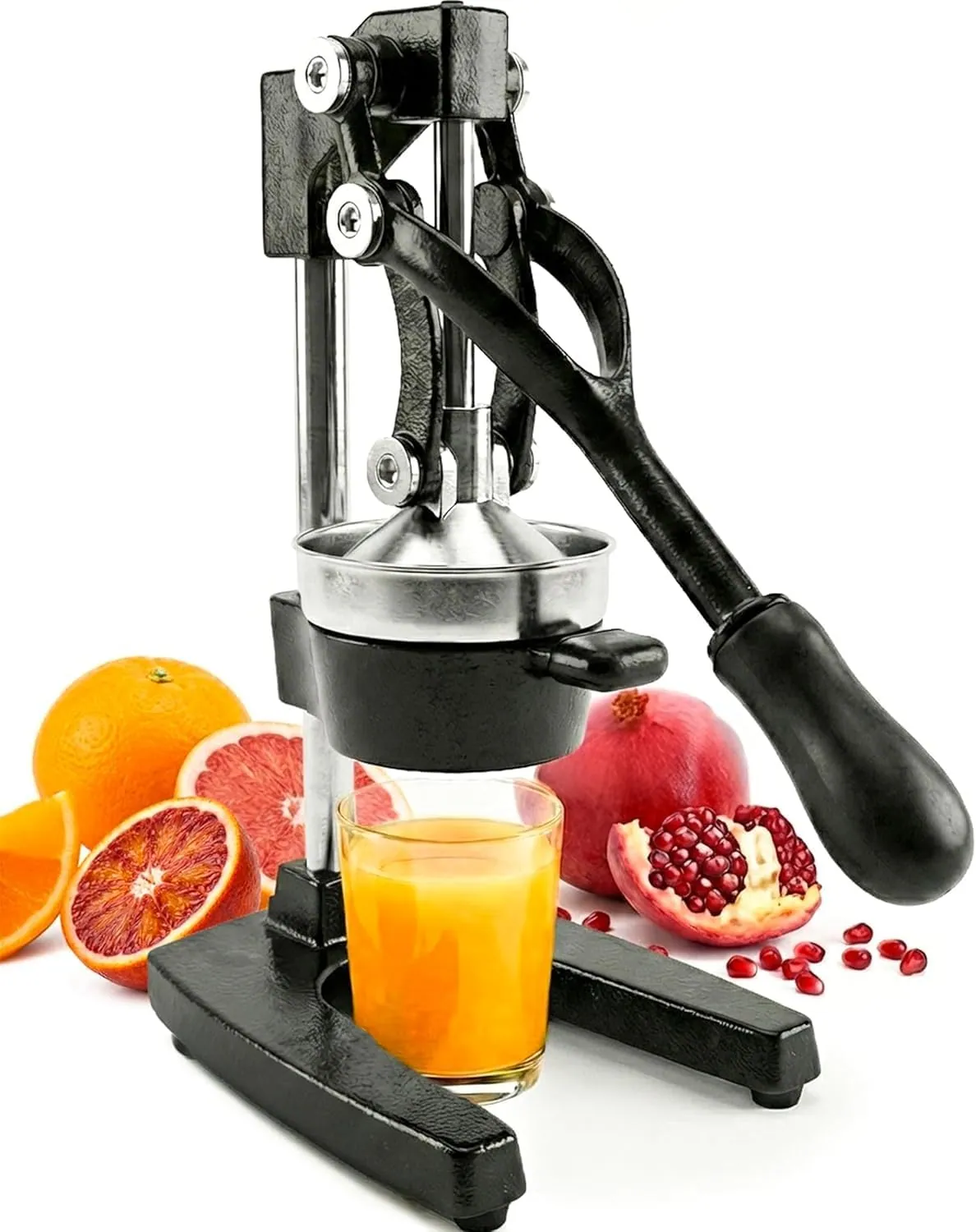
The cast iron lever press
- No motor, nothing to burn out: a long lever and your own weight
- Presses pomegranates as well as citrus
- Heavy on purpose: it stands still while you pull
- You control the pressure, so thin-skinned limes do not tear

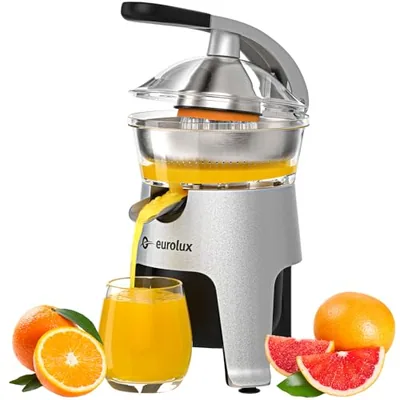
Eurolux makes citrus presses and nothing else: one cast iron lever press and three electric ones. They squeeze oranges, lemons, limes and grapefruit down to a dry shell, and the parts that touch juice go in the dishwasher.
The first decision is not which Eurolux model. It is whether a motor should do the pressing.
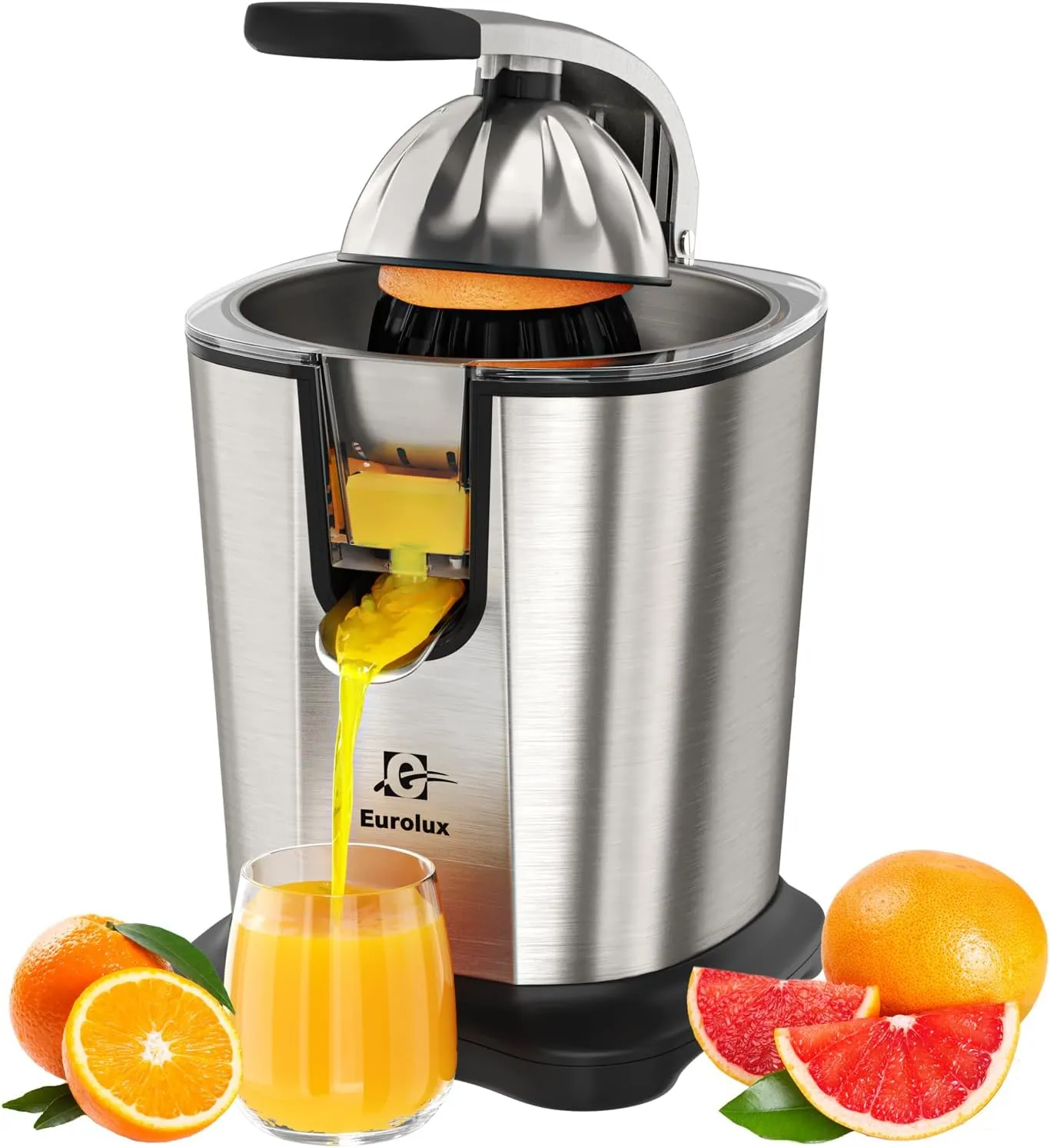
The four Eurolux juicers, in price order. Every card leads to a full page, and every buy link goes to the retail partner.
Best for: A glass now and then, on a small counter
4.4★ · 270 ratings as of August 2026, read at the retail partner

Best for: Lever power, no motor: limes in volume and pomegranates
4.4★ · 2,724 ratings as of August 2026, read at the retail partner
Best for: Daily fresh juice for a family, and Costco lime bags
4.4★ · 12,905 ratings as of August 2026, read at the retail partner
Best for: The same 300 W press in a die-cast body
4.3★ · 780 ratings as of August 2026, read at the retail partner
Three questions, one honest recommendation. Nothing is sent anywhere: the answer is worked out on this page.
A Eurolux press is a citrus press, not a juicer for apples. Before any money moves, make sure this is the machine you need.
Made for:
Not for:
Shreds whole fruit and vegetables at high speed and spins the juice out.
Made for:
Apples, carrots, beets. Loud, fast, more parts to wash.
Crushes produce slowly through an auger.
Made for:
Greens, celery, wheatgrass. Slow, quiet, expensive.
If your list is citrus, a press gets more juice out of it with less machine to clean. If your list is apples and kale, none of our juicers is the right buy, and we would rather say that here than in your review. The full explainer →
The claim we are happy to repeat: citrus in volume, fast.
The themes that come up again and again in owner feedback are speed and dry shells: two cups of lime juice in under five minutes, and bags of warehouse-club limes worked through in a quarter of the usual time. The lever and the motor both press the fruit against the cone instead of asking your wrist to twist it, and that is where the time goes.
We paraphrase those themes rather than quote reviews word for word: the reviews live at the retail partner, signed by their authors, and you can read all of them from any product page here.
How much juice is actually in an orange? We keep a table for that.
| Fruit | Typical juice per fruit | Fruits per 8 oz glass |
|---|---|---|
| Orange | 2.9–3.2 fl oz | 3–3 |
| Lemon | 1.2–2 fl oz | 4–7 |
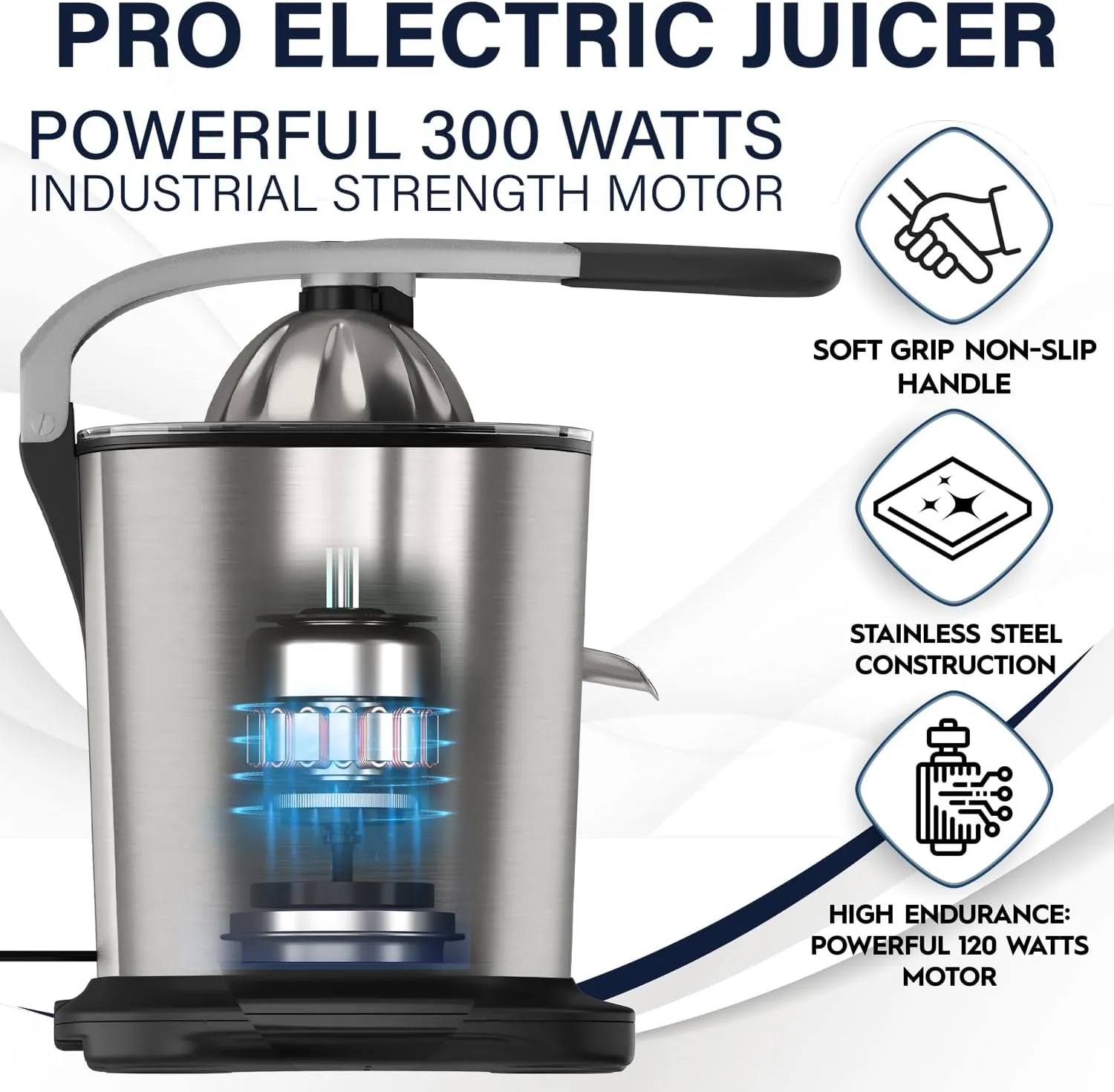
An electric citrus press hums: the motor turns only while the fruit is pressed down, and there is no shredding disc to scream. When the glass is full, the cone, strainer, spout and cover lift off in one motion. Those parts go on the top rack of the dishwasher. The motor base never goes in water: wipe it with a damp cloth.
The cast iron press is simpler still: the cup, cone and strainer rinse under the tap, and the frame gets a wipe.
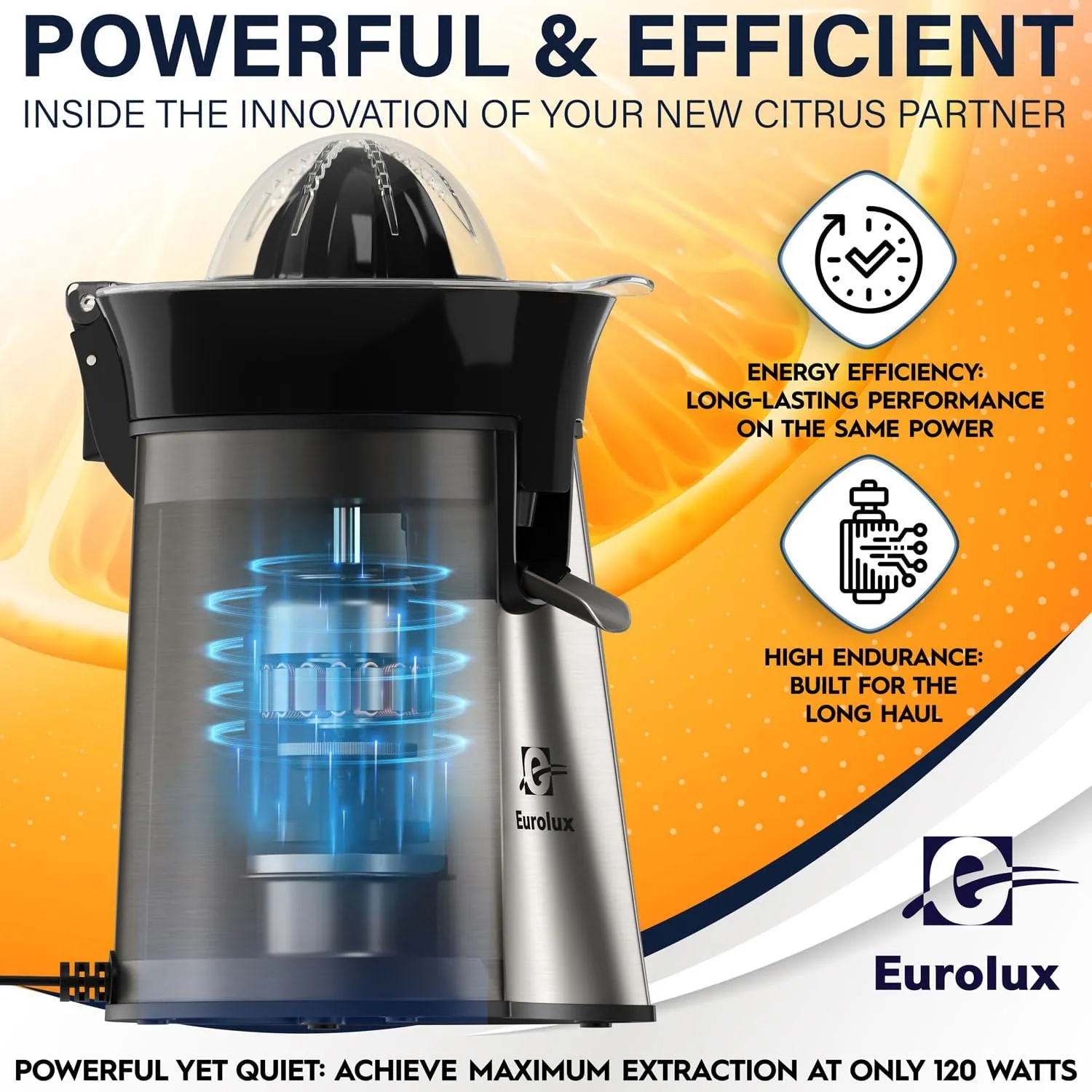
The most common complaint in this category, Eurolux included, is a plastic drive part failing on an electric press. We would rather explain that than hide it. The parts that fail are almost always asked to do something they were not built for: side pressure on the handle, a hand fighting the motor, a unit run dry against an empty cone.
The technique that keeps an electric press alive is simple. Cut the fruit level, center the half on the cone, press straight down with the handle and let the motor set the pace. Do not rock the handle sideways, do not push harder when the pitch drops, and give the motor a short rest after a big batch. Assembled right and pressed straight, the same parts that fail in a week of fighting last through seasons of juice.
The care guide that prevents the common failures → · Support and troubleshooting →
Counts and averages as of August 2026, read at the retail partner. Follow any product page to read all of them.
Cocktail makers keep coming back to the same picture: a warehouse-club bag of limes juiced before the party, wrists intact.
The press pulls the fruit down to a shell light enough to surprise people who used to squeeze by hand.
Owners of the lever press mention children working it themselves: pull the handle, juice comes out.
Some electric owners report a plastic drive part failing, sometimes within months. Our answer is technique and care first: press straight down, let the motor work, rest it between batches. If a unit fails anyway, returns and replacements run through the retail partner, per their policy. The care guide →
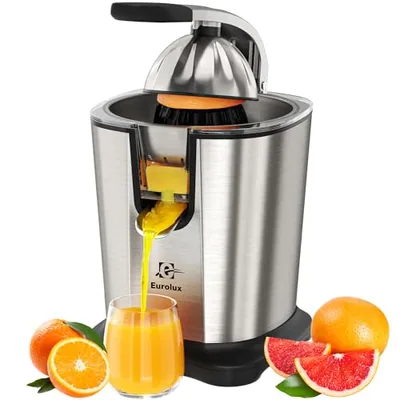 Daily juice for a familyThe Power-Pro: press, pour, rinse, repeat every morning.Margaritas and limes in volumePower-Pro or the lever press: both were built for the Costco bag.
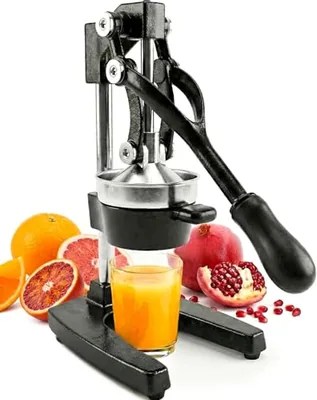 A small cafe or juice standThe cast iron press: commercial-grade lever, no motor to rest.
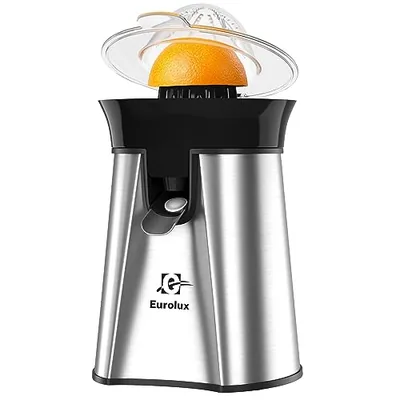 A small kitchen, a glass at a timeThe compact: lives on a corner of the counter, cleans in a minute.
Guides written for this exact niche: choosing, caring, and getting the most juice out.
The decision that comes before the model: a cast iron lever press or an electric citrus press. Volume, effort, counter space, what breaks and what does not.
Three machines called juicers that do three different jobs. What a citrus press is for, what it will never do, and which machine your shopping list actually needs.
Conservative juice-yield ranges per fruit, where the numbers come from, and how many fruits to buy for the glasses you need. With the method stated openly.
Yes on our presses: the cone is sized so a small lime centers on the tip and a grapefruit half rides the ribs. You do not swap cones mid-batch. The Power-Pro family also lists two strainer sizes for pulp control.
No. A citrus press only presses halved citrus (the manual press also handles pomegranates). For apples, carrots or leafy greens you want a centrifugal or masticating juicer, which we do not make.
The honest answer: the motor outlives the plastic drive parts, and the drive parts last when the press is used straight. Press down without rocking, let the motor set the pace, rest it after big batches, and never run it dry.
Warranty and returns run per the retail partner's policy. We do not publish a separate warranty term of our own.
It is heavy: the product page shows 18.3 lb in its own materials. That mass is why it stands still while you pull the lever. If you plan to store it in a cupboard between uses, lift with both hands and keep it low.
It is light, and on a slick counter it can walk. A silicone mat or a damp tea towel under the base fixes it. Steadying the base with your free hand works too.
The strainer holds back seeds and most pulp. For completely pulp-free juice, pour through a fine sieve. For more pulp, spoon some back in. No press makes pulp disappear entirely.
Lift off the cone, strainer and spout, rinse or load them on the top rack of the dishwasher, and wipe the base. Ninety seconds in practice. The motor base never goes in water.
A pitcher's worth in one session is normal. After a big batch, give the motor a few minutes of rest before the next one: it is a kitchen press, not a juice-bar machine running all day.
Every buy button here goes to the product's page at the retail partner. Ordering, payment, delivery and returns all happen there, under their policy.
After you buy a Eurolux press: care, troubleshooting and honest answers about parts.