
Cast Iron Manual Citrus Press
4.4★ · 2,724 ratings as of August 2026, read at the retail partner
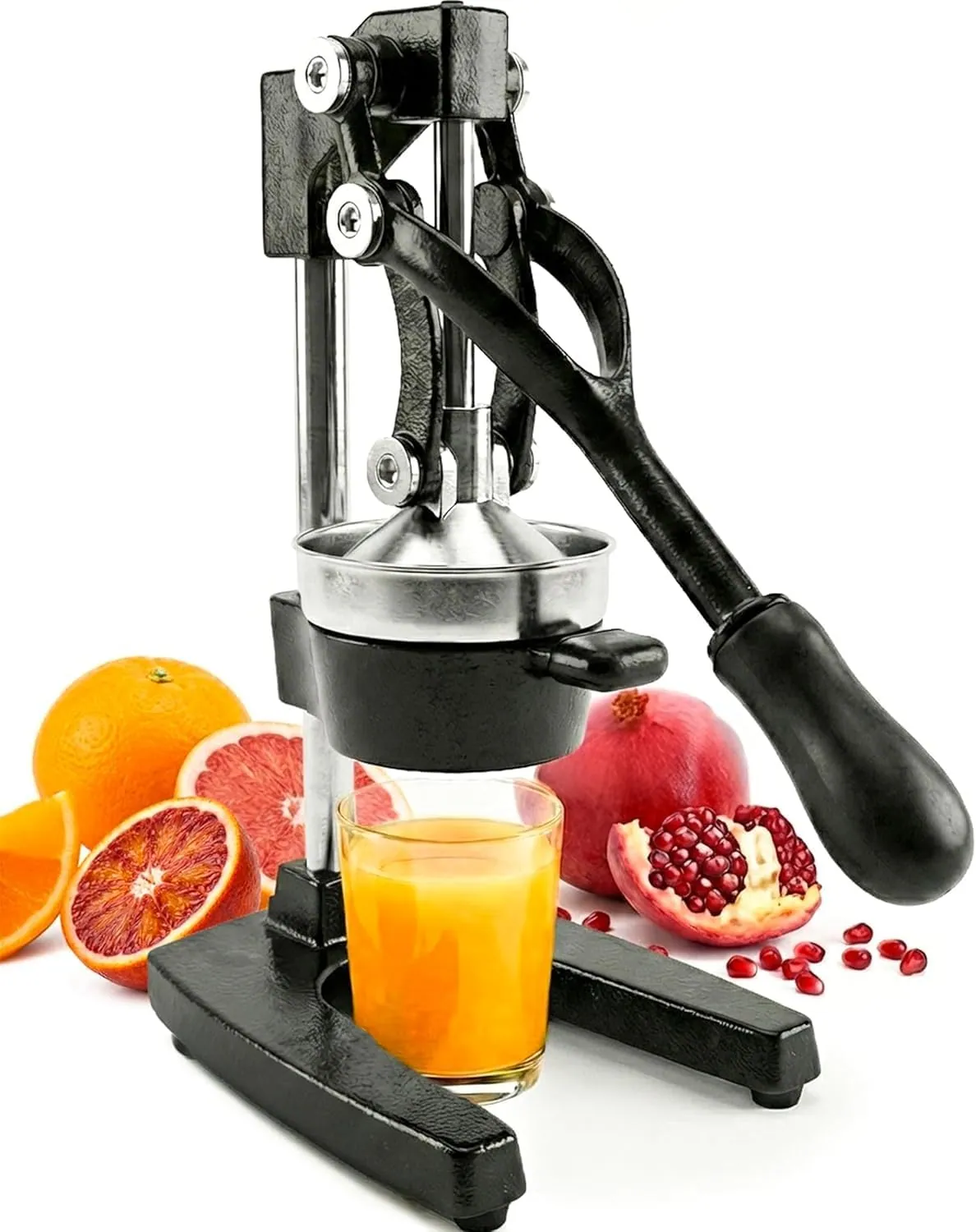
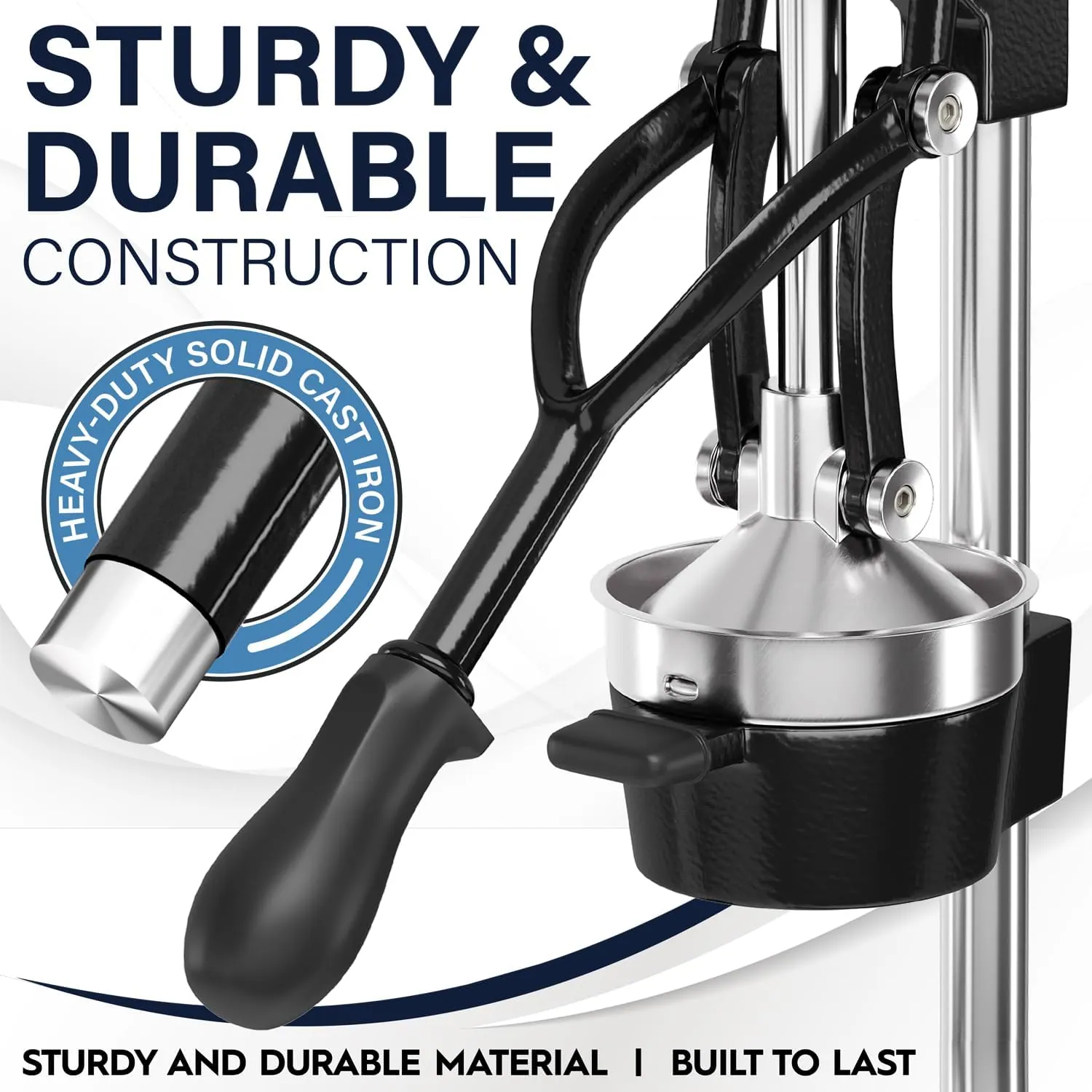
A commercial-grade lever press, as the product page puts it: cast iron, no motor, nothing to burn out. The one we recommend when the answer to 'how many limes?' is 'all of them.'

Prices shown were read at the retail partner and refresh on our schedule. The figure at checkout is the one that counts. Last updated 23 August 2026. Warranty per the retail partner's policy.
How it works
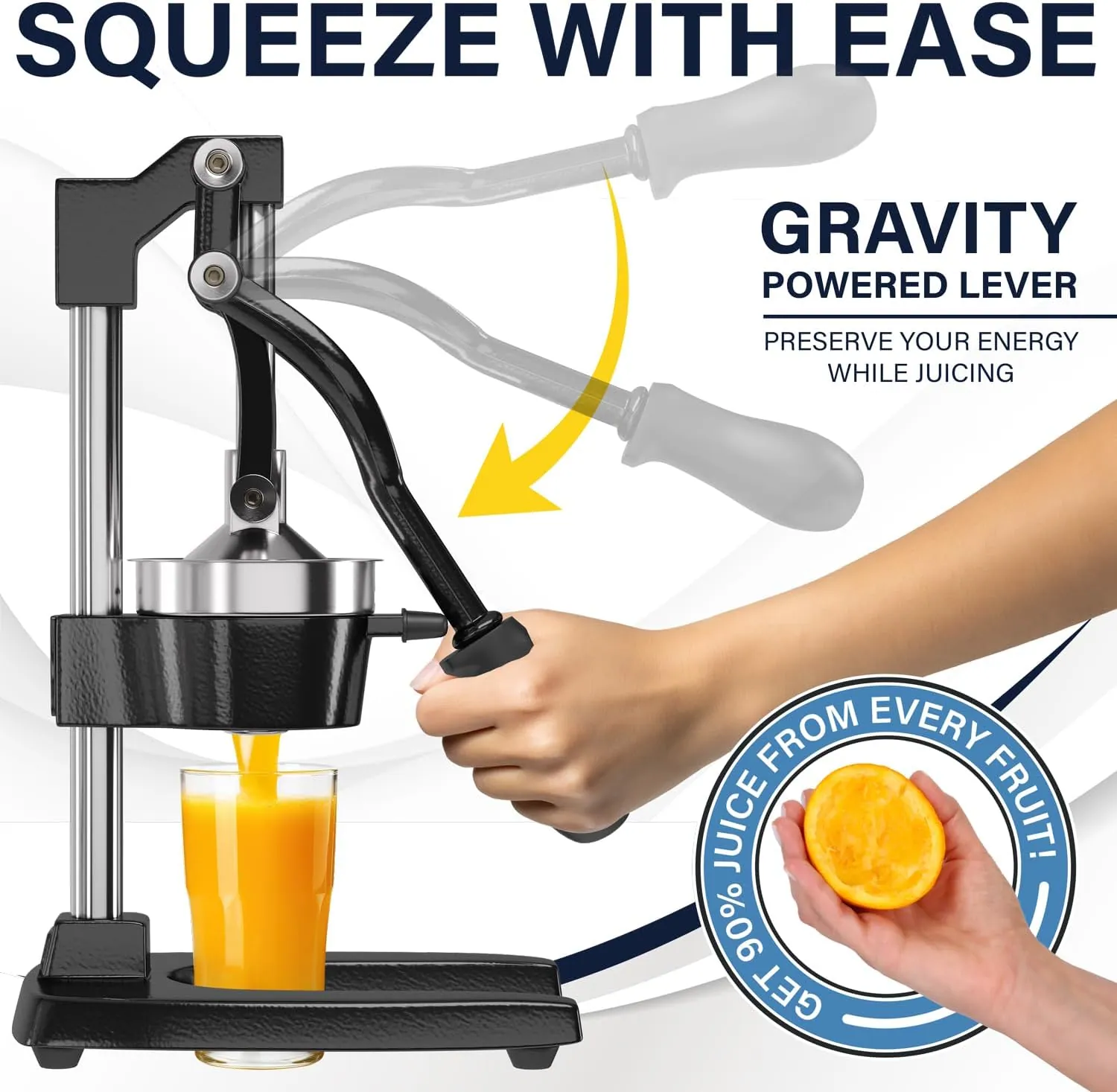
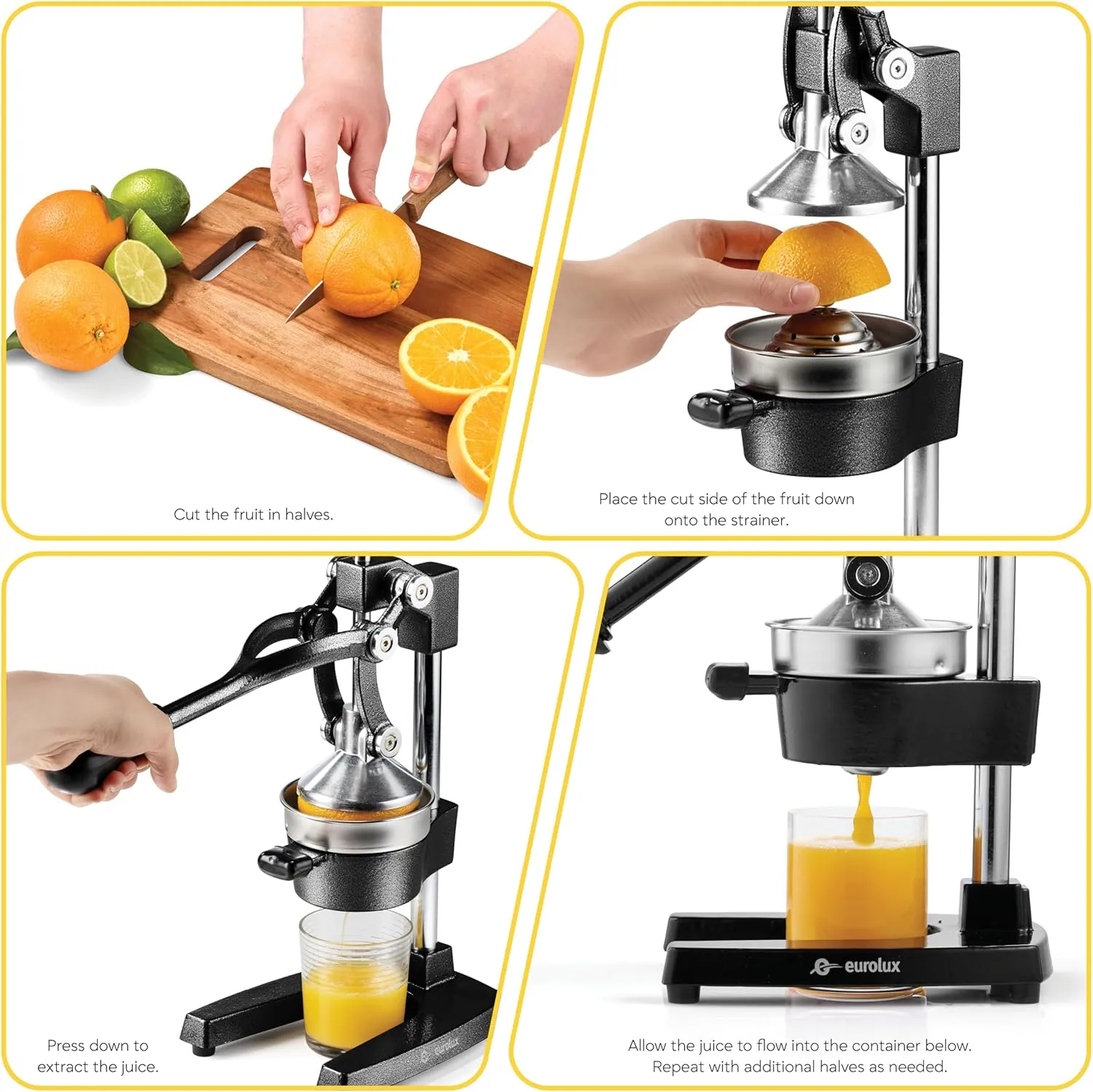
Set a halved fruit cut-side down on the cone, pull the long lever, and your own weight does the pressing through a geared arm. One firm, even pull per half: roll the fruit on the counter first, cut it level, and the shell comes out pressed flat. The stainless cup catches the juice below.
The press takes everything from limes to grapefruit halves, and unlike our electric models it also presses pomegranate halves: quarter the fruit, press skin-side up, and expect some spray the first time. There is a whole guide for that.
Pace, and when to rest it
There is no duty cycle, because there is no motor. The pace is your arm. Owners running market stands mention working through crates in a sitting. The press does not care.
Care
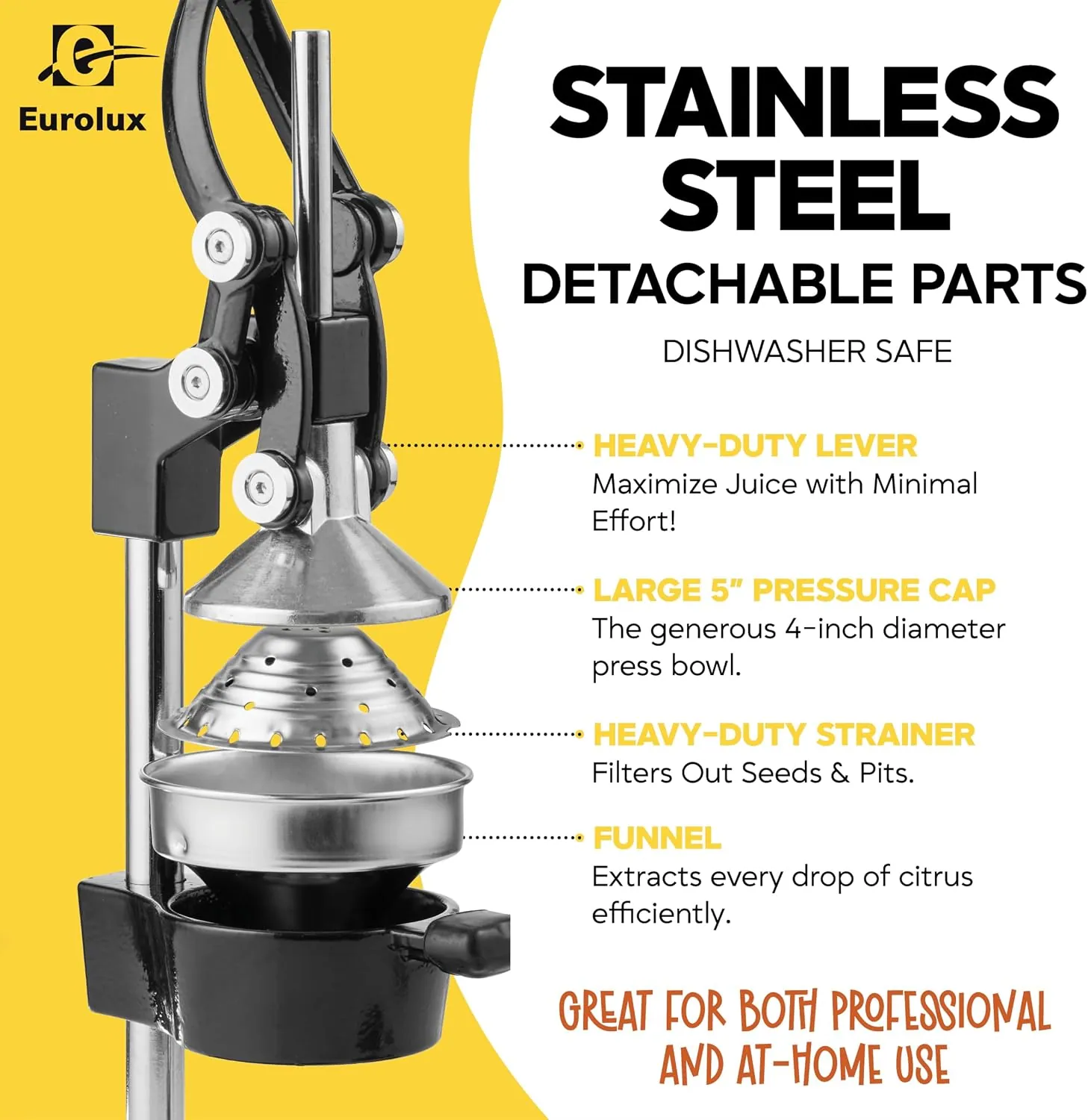
The cup, cone and strainer rinse under the tap or ride the top rack. The frame wants a wipe-down, not a sink. Keep the pivot points dry after cleaning and the lever stays smooth. There is a short care guide for the frame.
Every part, on the table
The take-apart gallery: what comes off, what goes in the dishwasher, and what the plastic parts actually look like. Nothing hidden.
What this juicer is not
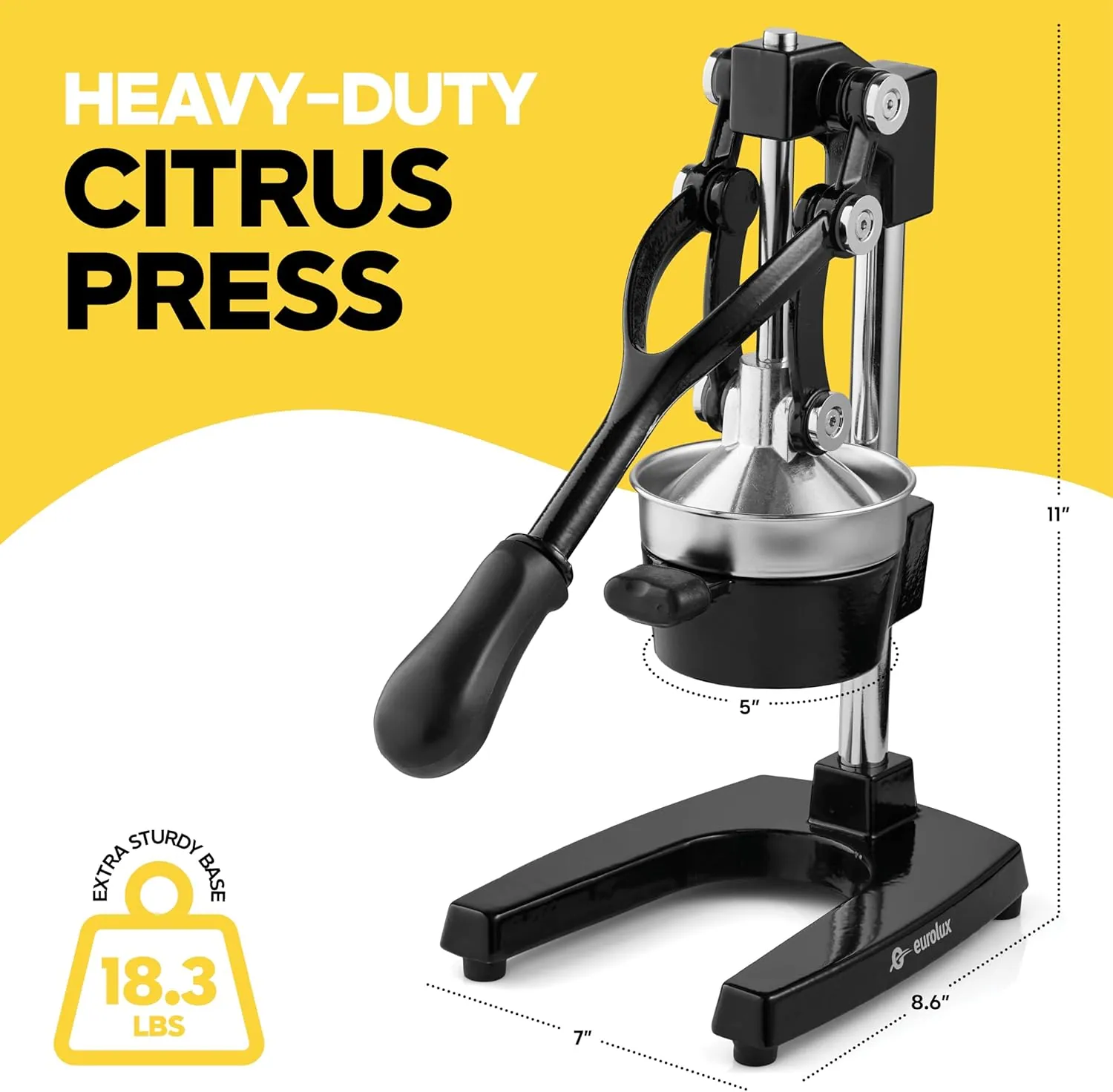
What it is not: light. The product page's own materials put it at 18.3 lb, and that mass is the point: it stands still while you pull. Store it low if it lives in a cupboard, and lift it with both hands. The rubber feet grip a dry counter well. On a wet counter, wipe first. Yield depends on your technique more than on the machine: a rolled, level-cut half pressed once with intent gives up nearly everything.
What you are paying for
Next to a cheap hand squeezer, you are paying for leverage and mass: the long arm multiplies your push, and the frame does not walk or flex while it happens.