Cast iron press care: keep the lever smooth
How to keep a cast iron citrus press working sweetly: what to wash, what to keep dry, how to store 18 pounds of press and what the rubber feet need.
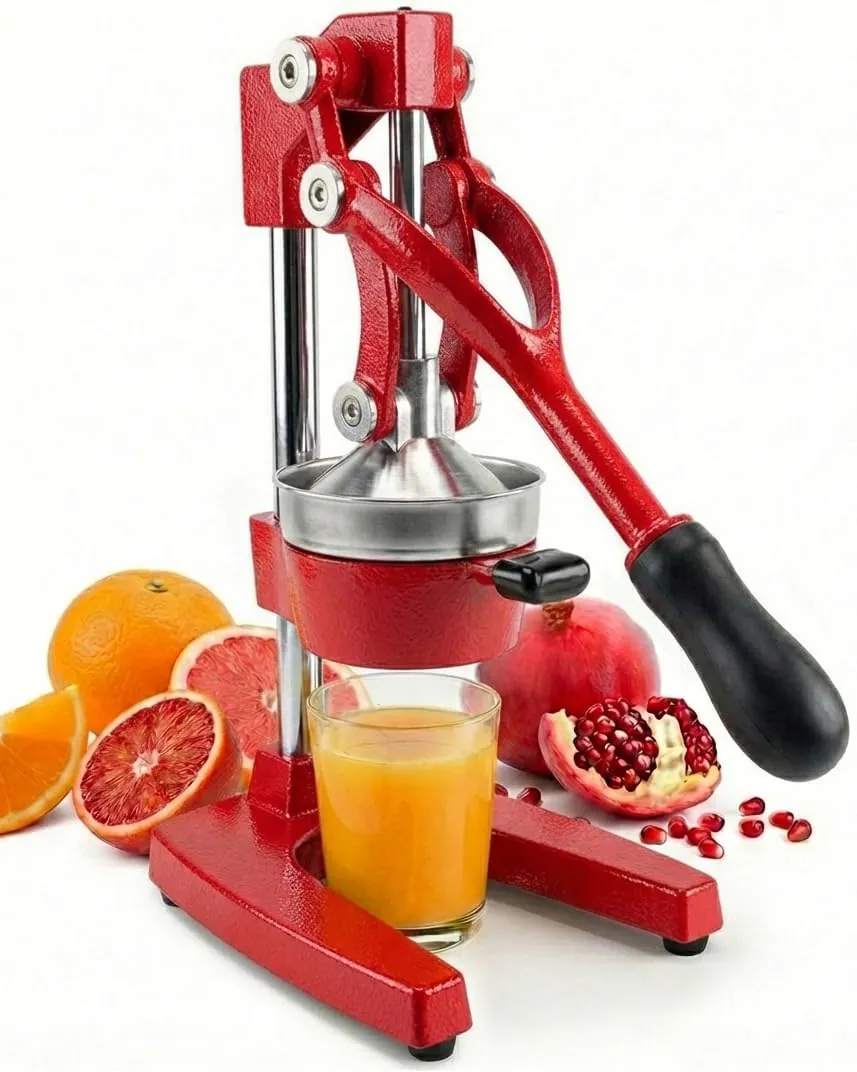
Two materials, two rules
A lever press is two things at once: stainless parts that touch juice, and a cast iron frame that must never live wet. The parts that touch juice come off and wash like any other kitchen item. The frame gets wiped and dried, and that is all.
Get those two rules the wrong way round and you will either have a rusty frame or a sticky cone.
The pivots
The lever runs on pivots, and the only thing they ask is that they stay dry. After juicing, wipe around the arm and the pin and let the press air for a few minutes before it goes away.
If the arm ever feels gritty, that is juice sugar rather than wear: a damp cloth and a dry one will bring it back. Do not oil the pivots with cooking oil, which goes sticky. A press that is dry and clean does not need lubrication.
Rubber feet and your counter
The feet grip a dry counter well. On a wet one they slide, so wipe the counter before you start. If your worktop is delicate, put the press on a mat rather than trusting eighteen pounds to a rubber pad.
The same weight that makes it stable makes it hard on a surface if you drag it: lift, do not slide.
Keep them clean, too: juice dries on rubber and turns grip into glaze. A wipe when you clean the cup takes a second and keeps the press standing where you put it.
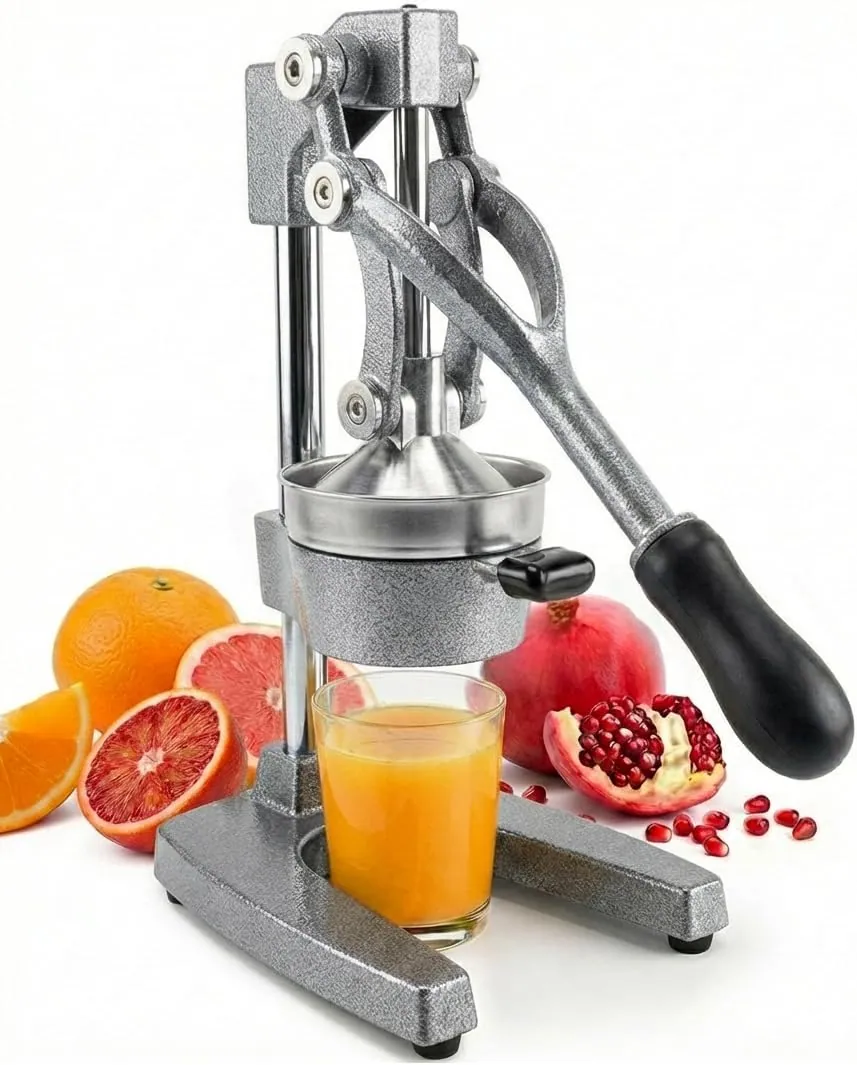
Storing eighteen pounds
The product page puts the press at 18.3 lb, and that decides where it lives. A low shelf or the counter itself is right, and a high cupboard is not: because getting it down is a two-handed lift over your head.
Lift by the frame, not the lever: the arm is geared and pivots, and it will move while you carry the press if you hold it there.
The product page puts this press at 18.3 lb, and that is worth planning around. Store it low: a base cupboard or a shelf at hip height, never above head height. Lift it with two hands under the frame rather than by the lever.
Many owners simply leave it out, which is the sensible answer if you have the room: it looks like what it is, and the press you can see is the press you use.
Where to go next
About the author
Casey Whitmore writes the guides on this site. Casey squeezes citrus most days of the week, on every juicer we make, and keeps notes on what works, what breaks and what is worth the counter space. No certificates, no titles: just a lot of juiced limes.