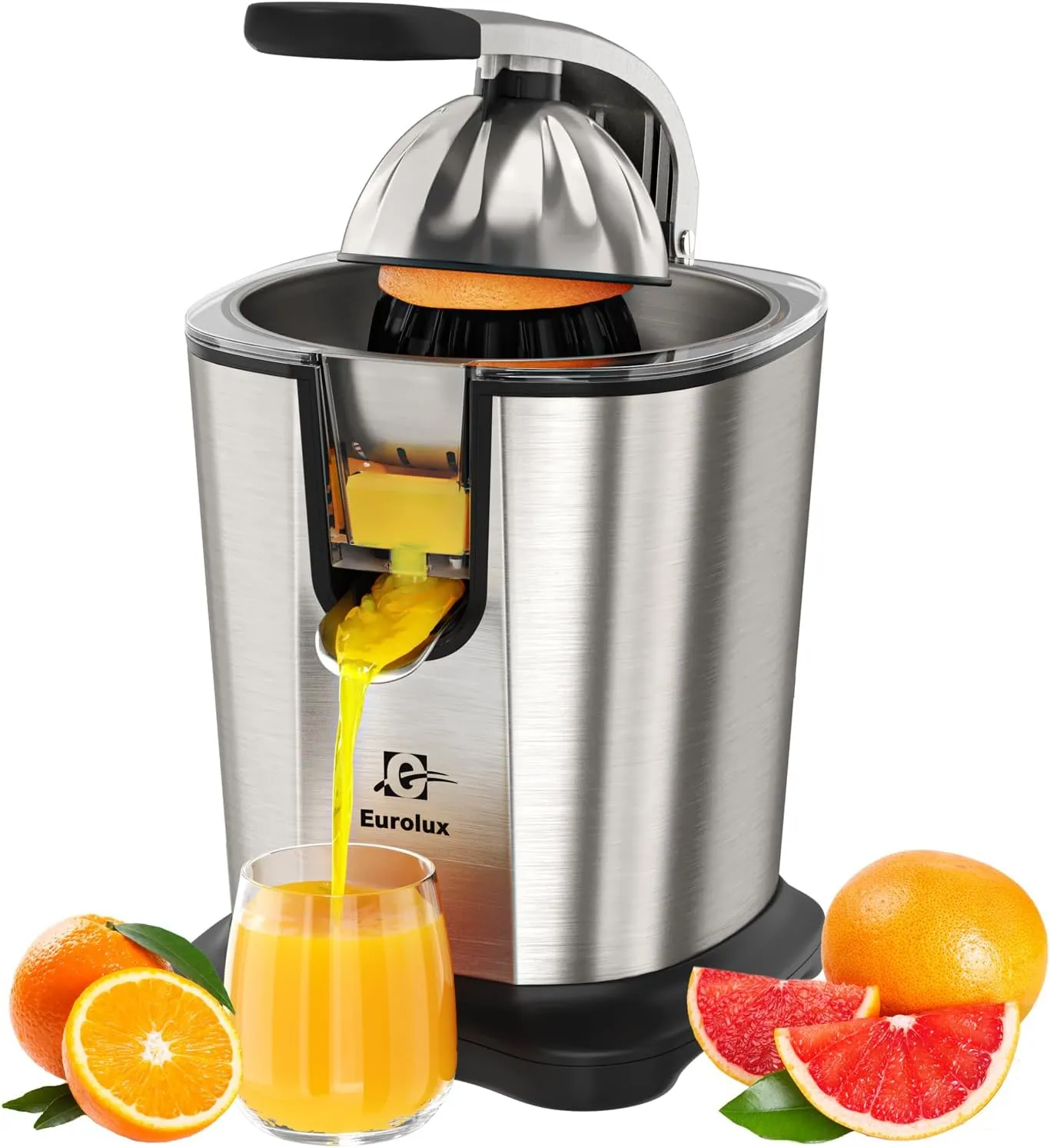
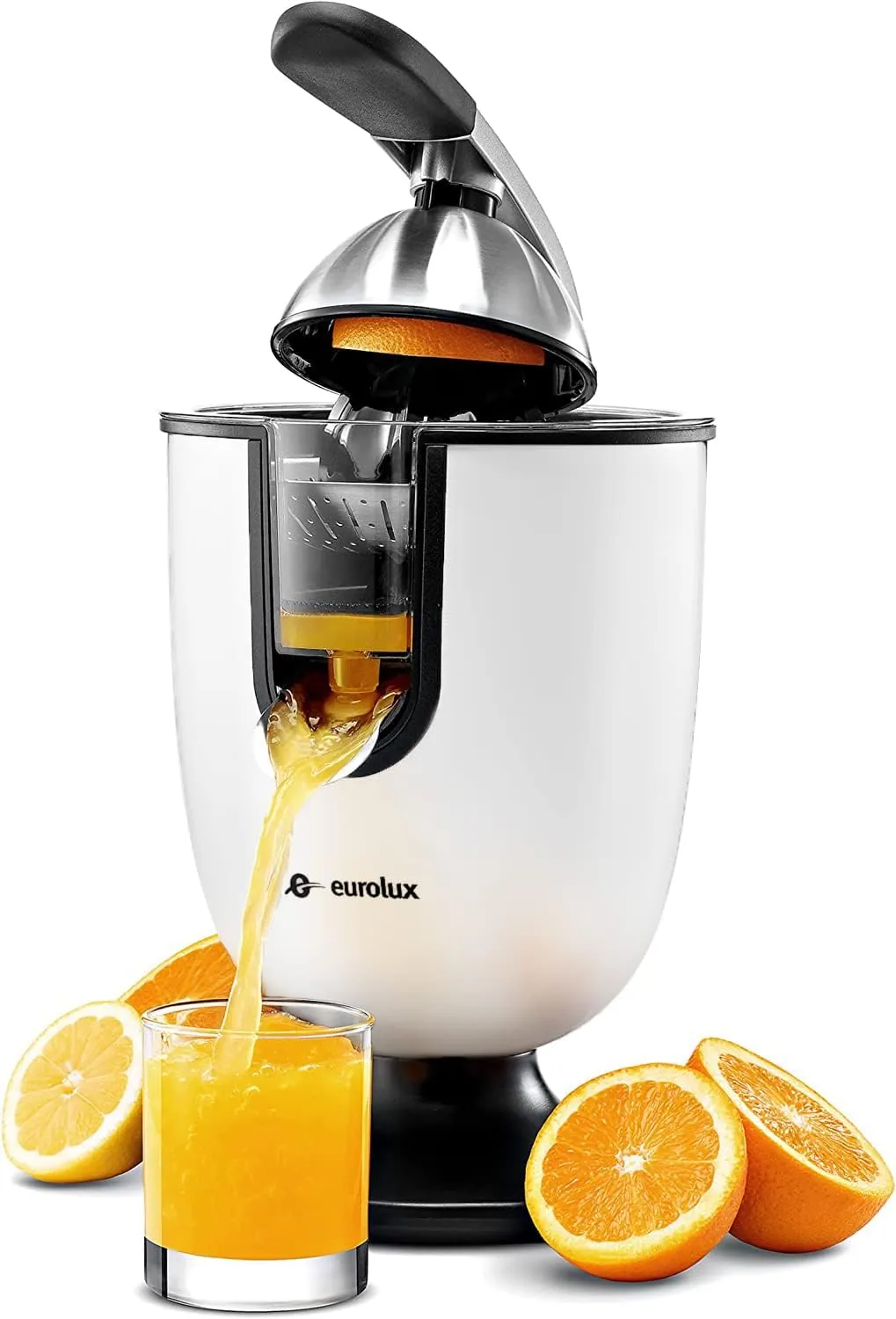
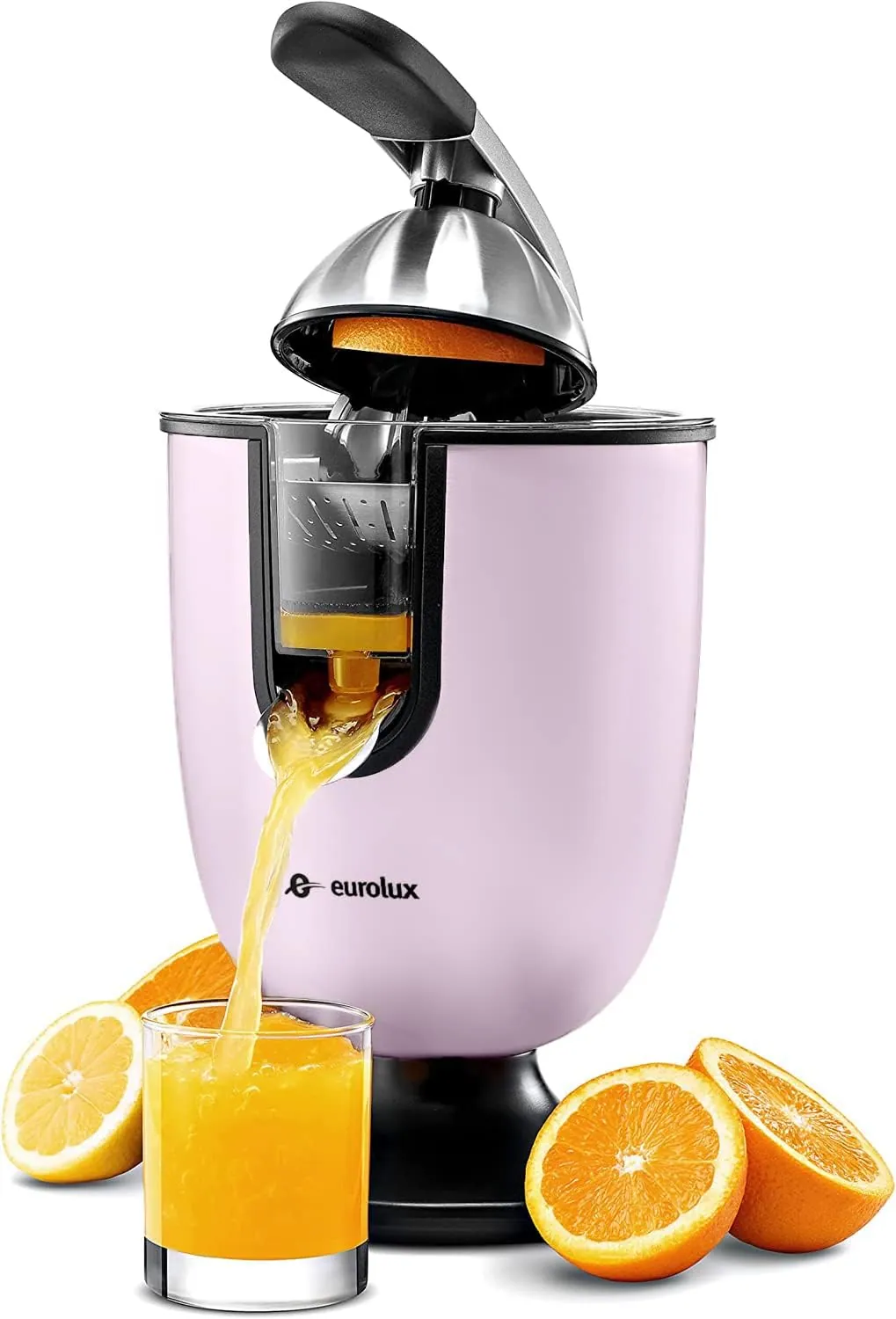
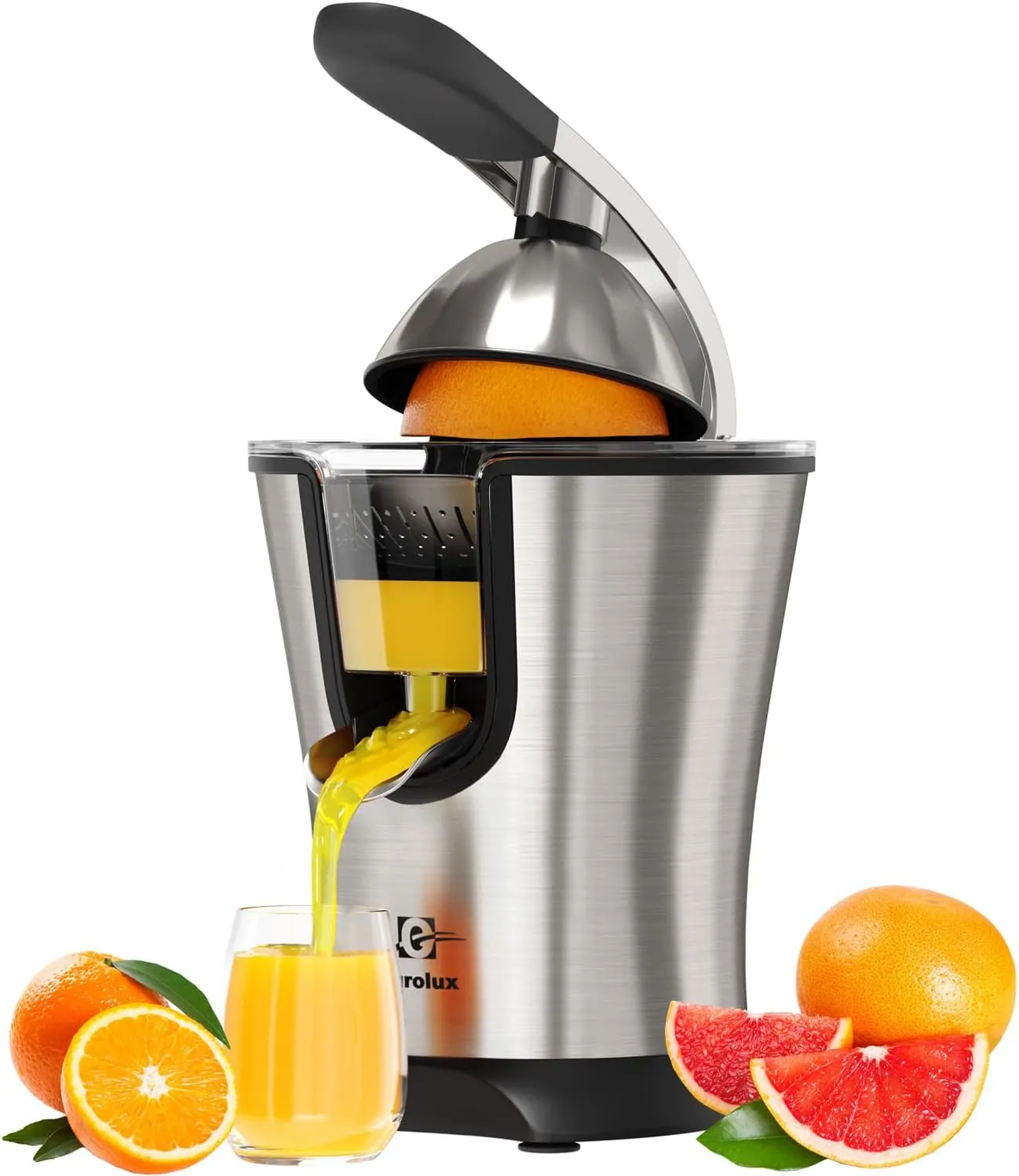
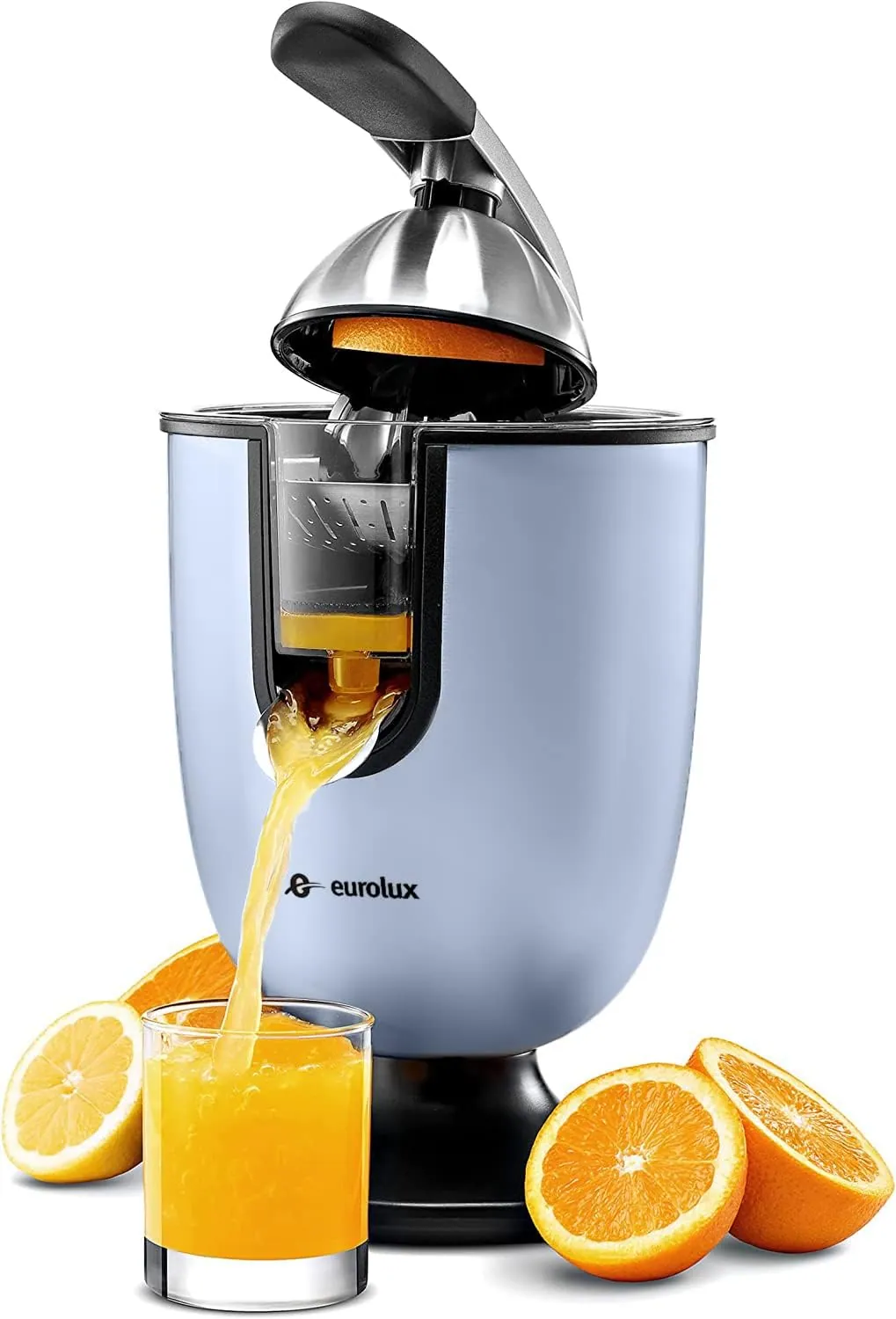
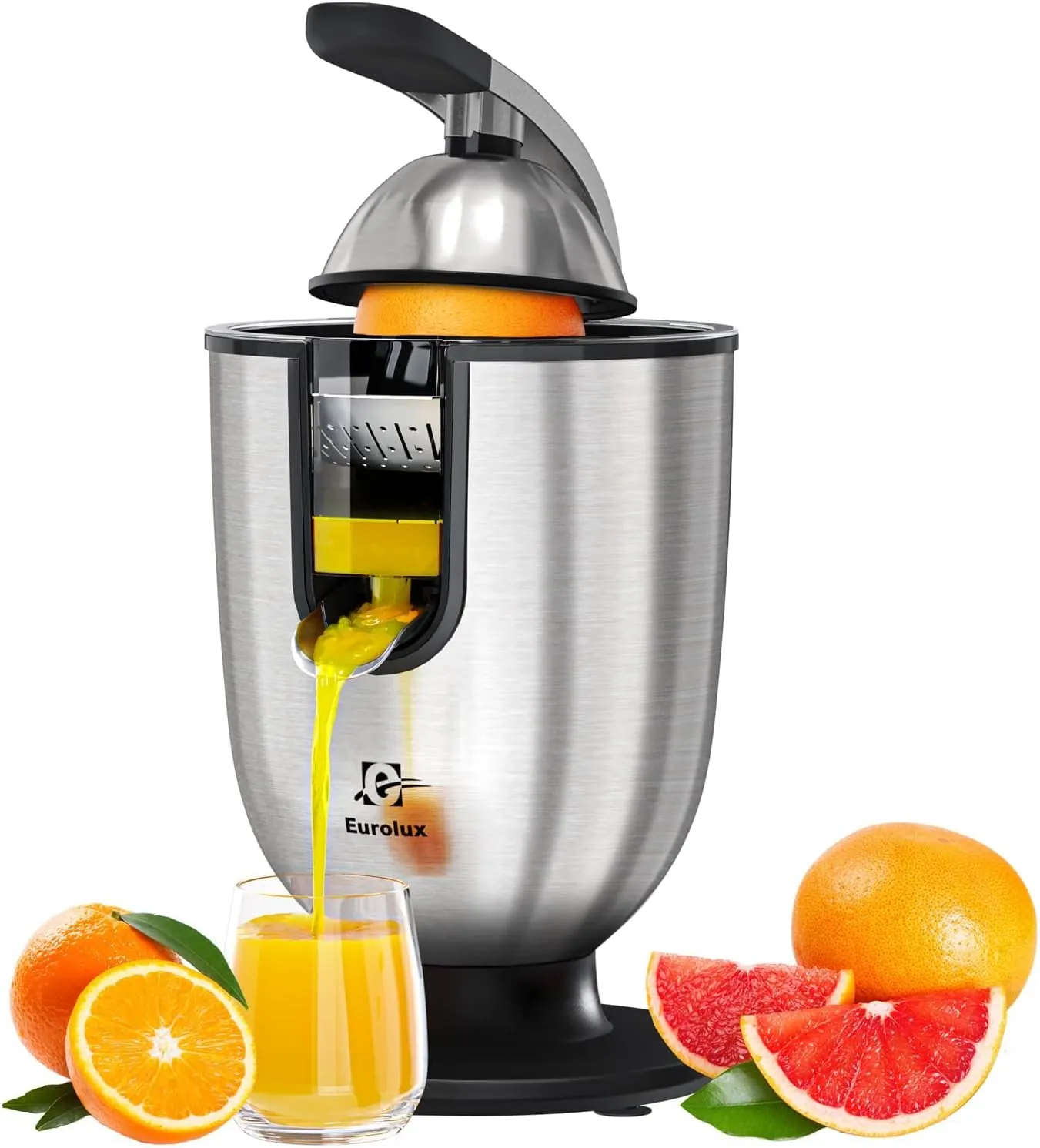
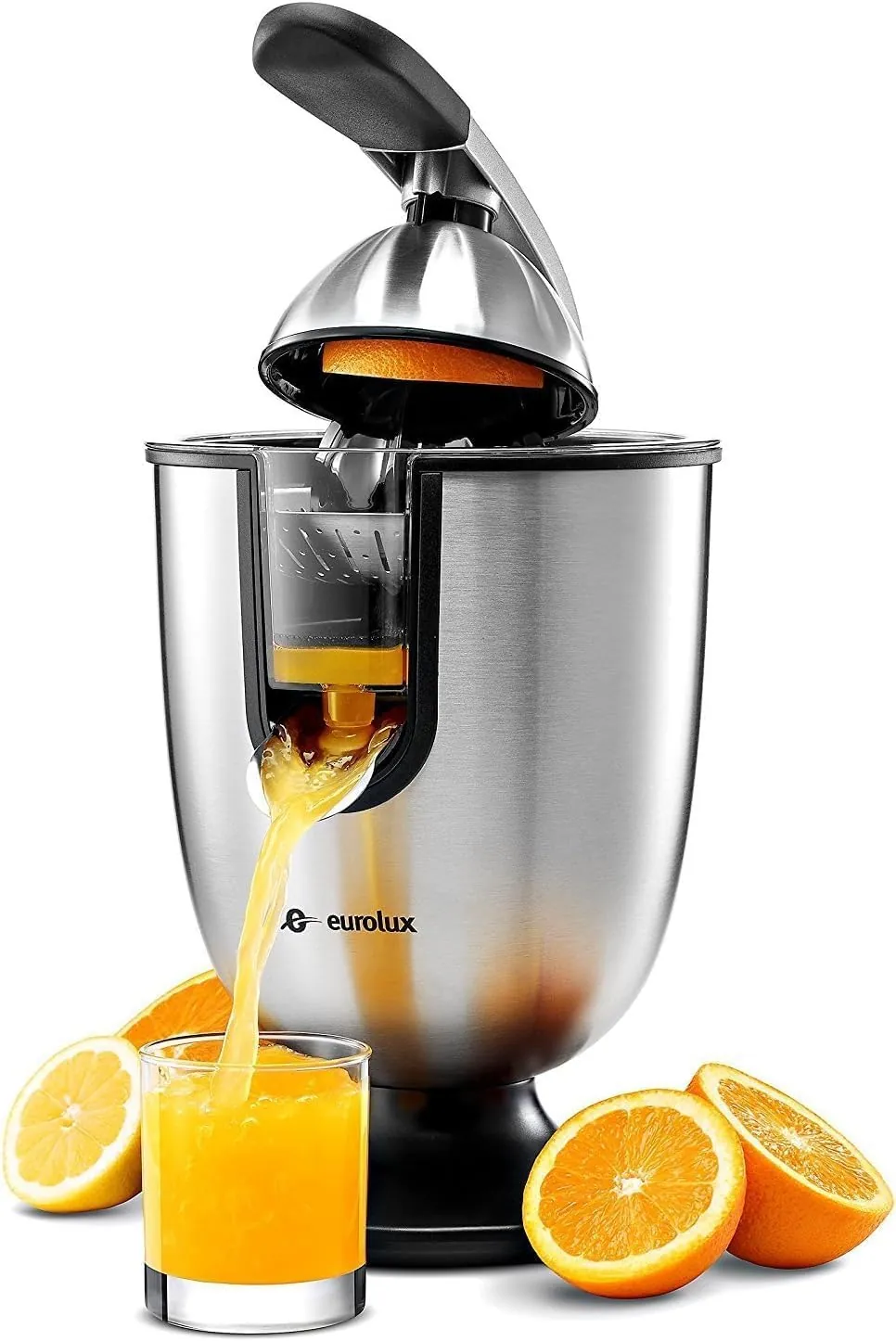
Power-Pro Electric Citrus Juicer (ELCJ-1600 family)
4.4★ · 12,905 ratings as of August 2026, read at the retail partner
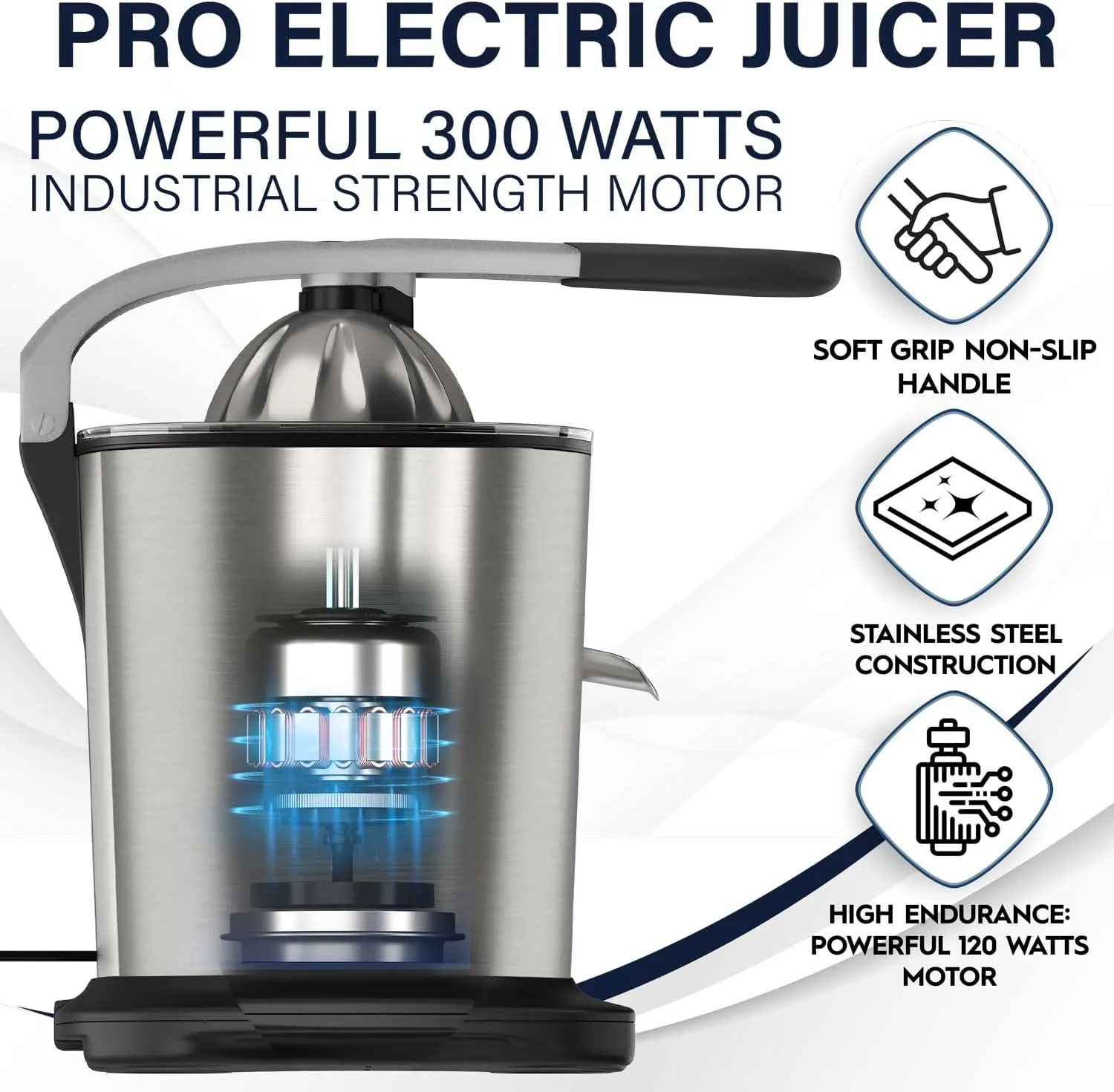
The electric press we sell the most of: press the half down, the motor starts, the glass fills. This page covers the whole ELCJ-1600 family, from the 120 W base model to the 300 W Power-Pro.

- Base ELCJ-1600, 120 W motorprice at the partner
- Ultra-Powerful motor version$69.99
Prices shown were read at the retail partner and refresh on our schedule. The figure at checkout is the one that counts. Last updated 23 August 2026. Warranty per the retail partner's policy.
How it works
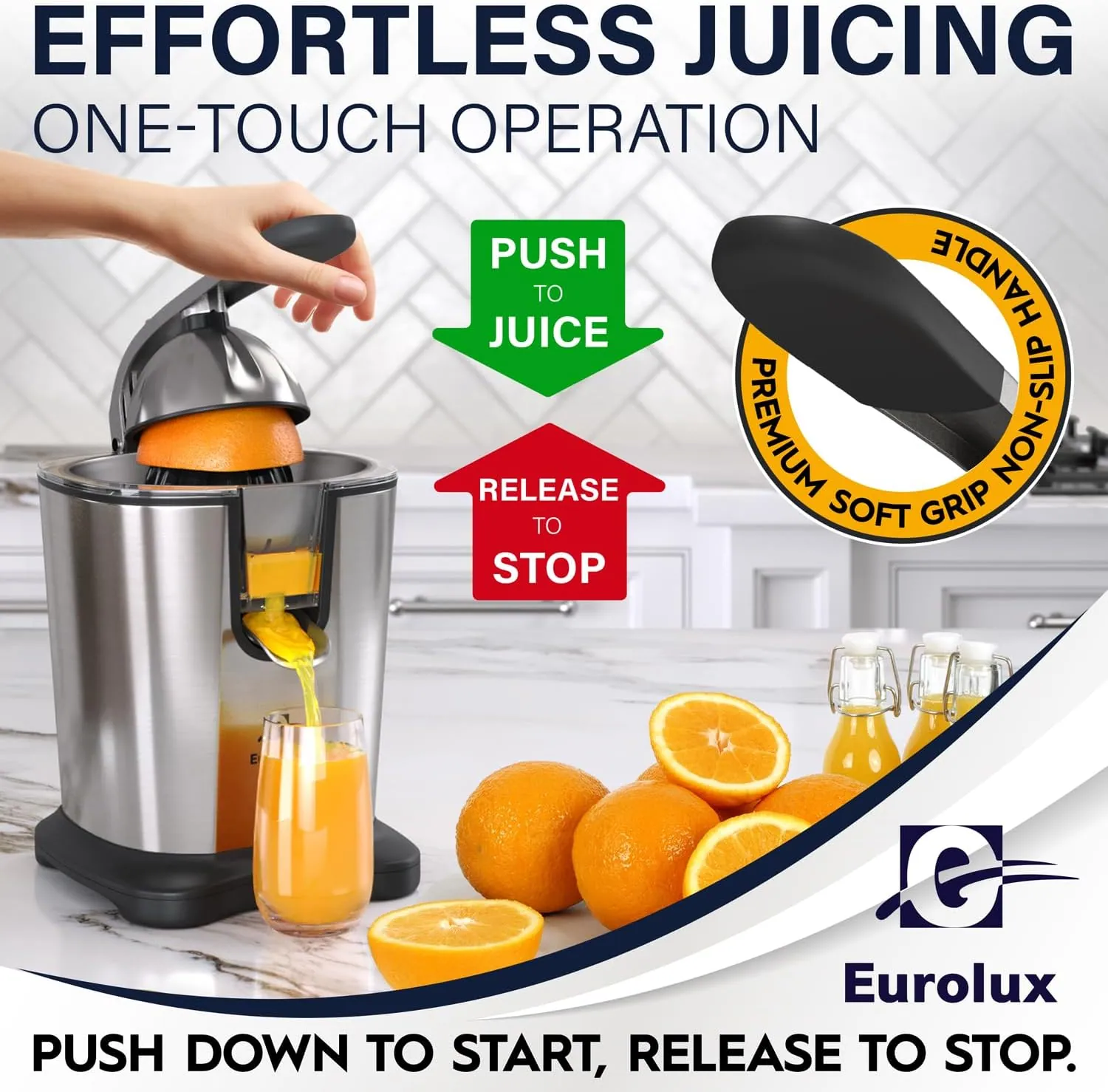
There is no switch to find with wet hands. Put a halved orange on the cone, press down with the soft-grip handle, and the pressure itself starts the motor. Lift, and it stops. The cone turns one way, then the other, working the ribs of the fruit instead of grinding one path through it. Seeds and most of the pulp are caught by the strainer, and the juice you want runs from the spout.
One cone takes everything from a key lime to a grapefruit half: small fruit centers on the tip, large fruit rides the outer ribs. There is no cone rack to store and nothing to swap mid-batch. The family also lists two strainer sizes for pulp control, so the glass comes out the way you like it.
Pace, and when to rest it
A pitcher in one session is what we would call normal use. This is a kitchen press, not a juice-bar machine: after a big batch, give the motor a few minutes before the next bag of fruit. If the pitch of the motor drops mid-press, ease off rather than pushing harder.
Care
The cone, strainer, spout and cover lift off and go on the top rack of the dishwasher. The base wipes clean and never goes in water. The part that decides how long this press lives is technique: press straight down, never rock the handle sideways, and never run it against an empty cone.
Every part, on the table
The take-apart gallery: what comes off, what goes in the dishwasher, and what the plastic parts actually look like. Nothing hidden.
What this juicer is not
What this press is not: it does not juice apples, carrots or greens, it is not silent (it hums while pressing), and its drive parts are plastic. Pressed straight, they last. Fought with, they fail, and that is the single most common complaint in this whole category. Warranty and returns run per the retail partner's policy.
What you are paying for
What the higher price buys next to a bargain press: a stronger motor in the Power-Pro trim, a stainless body instead of painted plastic, a press handle that takes the load off your wrist, and a cone-and-strainer set sized for everything from limes to grapefruit. If you juice a glass a month, our compact model is honestly the better buy.