Pomegranate pressing 101 on a manual lever press
How to press pomegranates on a cast iron lever press without bitterness or a stained kitchen: cutting, pressure, yield and clean-up.
Why the lever press and not an electric one
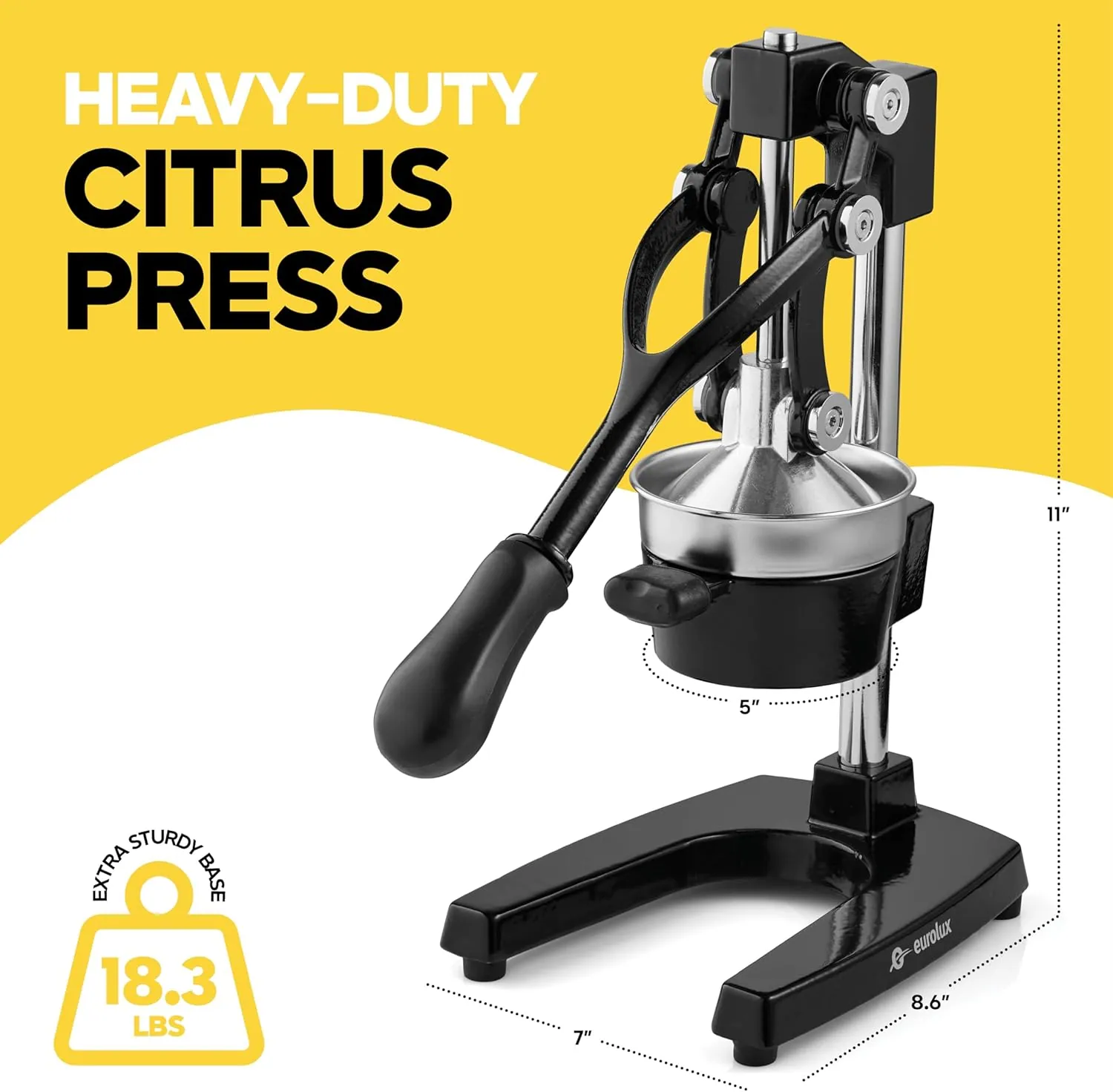
Pomegranate is the one fruit in this guide that our electric presses are not for. The arils need steady, heavy pressure rather than a spinning cone, and the skin is tough enough to make a motor work sideways.
The cast iron lever press handles it because your weight arrives through a geared arm, straight down, as slowly as you like.
Cutting matters more than pressing
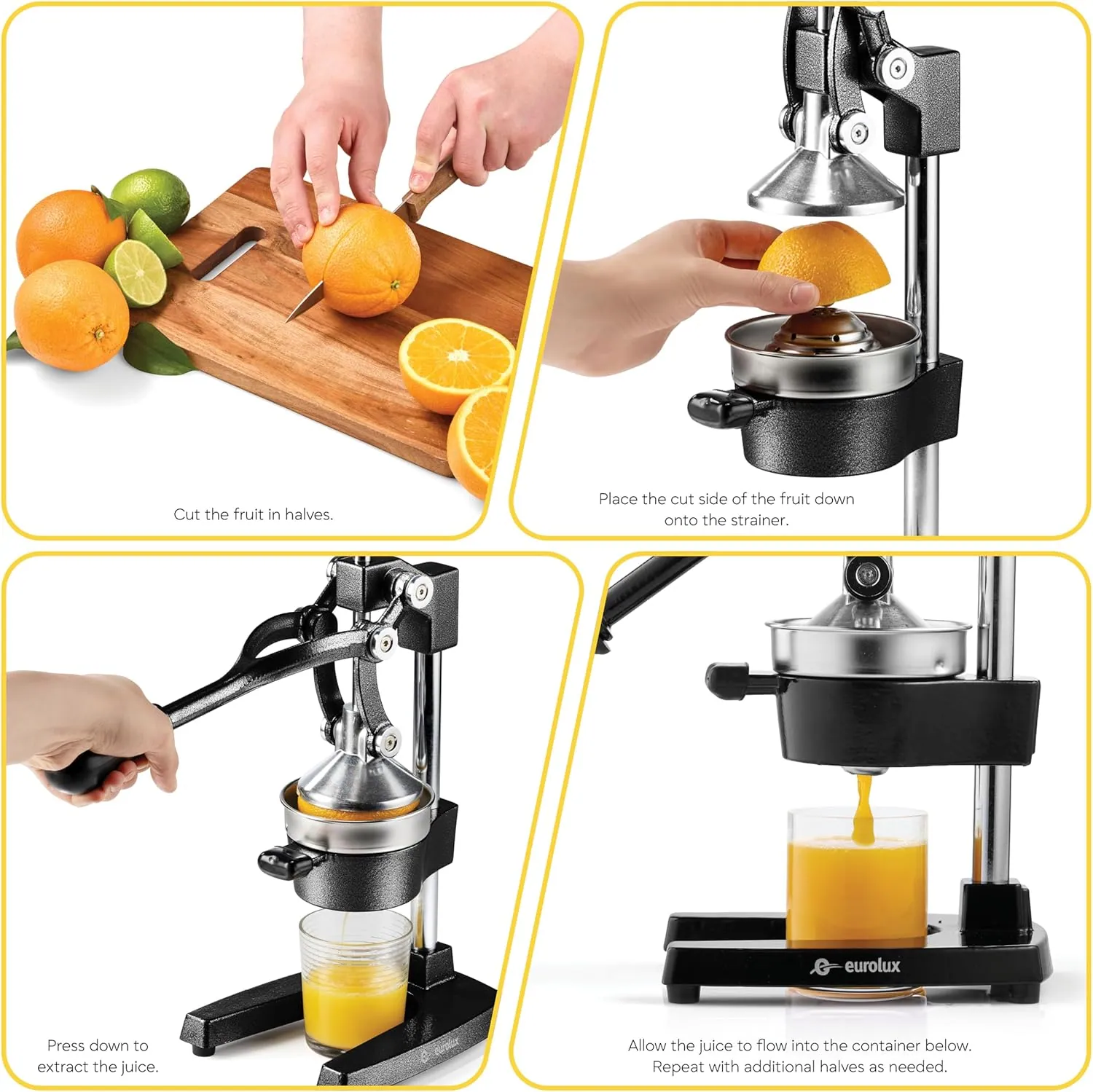
Cut across the equator, not through the crown. That opens the chambers so the arils face the cone and the juice has a straight way out. Cutting the other way leaves half the fruit pressing against pith.
Expect one squirt on your first fruit: pomegranate juice travels. An apron is not a joke here, and a wiped counter beats a stained one.
Pressure, and where to stop
Pull steadily and stop when the flow slows to a trickle. The last few millimetres of travel crush the white pith, and pith is where the bitterness lives. A little astringency is the fruit. A mouth-drying bitterness means you went too far.
A large pomegranate gives roughly half a cup of juice this way. Two or three make a glass.
Cleaning after pomegranate
Rinse the cone, cup and strainer straight away: pomegranate juice dries to a sticky, staining film. Warm water and a drop of dish soap is enough if you get to it before it dries.
Wipe the frame and dry the pivots. Anything left overnight will need soaking rather than rinsing.
Pomegranate stains, and it sets. Rinse the cup, cone and strainer while they are still wet and the color lifts with water alone. Leave them overnight and you are scrubbing pink out of a strainer mesh with a brush.
The frame wants a damp cloth, not a sink: dry the pivot points afterwards so the lever keeps its smooth travel. A drop of juice left in a joint is what turns a smooth arm into a sticky one.
What a pressed half should look like
A finished half is pale, flat and light, with the membranes visible and dry. If it still feels heavy, the press did not reach the arils in the middle: re-cut the half across the equator and press again.
White pith showing through the juice means the opposite problem, too much travel. Bitterness comes from there, not from the fruit.
Where to go next
About the author
Casey Whitmore writes the guides on this site. Casey squeezes citrus most days of the week, on every juicer we make, and keeps notes on what works, what breaks and what is worth the counter space. No certificates, no titles: just a lot of juiced limes.